

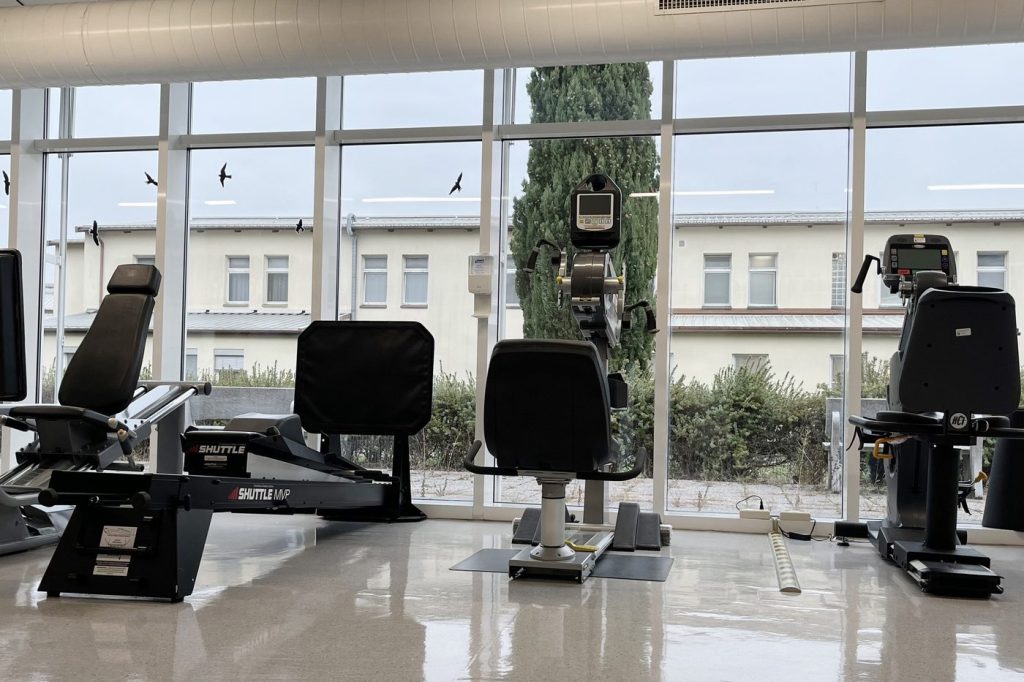
Schedule A Group I
Schedule A is made up of certain occupations, set out at 20 CFR 656.15, for which the Department of Labor (DOL) has determined there are not sufficient U.S. workers who are able, willing, qualified and available. Schedule A also establishes that employing foreign workers in these occupations will not adversely affect the wages and working conditions of U.S. workers similarly employed.
The occupations listed under Schedule A Group I are:
- Physical therapists who have all the qualifications necessary to take the physical therapist licensing examination in the state where they propose to practice physical therapy (this page)
- Professional nurses: you have a Commission on Graduates of Foreign Nursing Schools (CGFNS) certificate, have passed the National Council Licensure Examination for Registered Nurses (NCLEX-RN), or hold a full and unrestricted (permanent) license to practice nursing in the state of intended employment: see Registered Nurse
Group II covers people of exceptional ability in the sciences or arts and the performing arts.
Evidence for physical therapists
For physical therapist occupations, the employer must submit evidence that you currently have, and had at the time of filing, a permanent license to practice in the state of intended employment. The minimum requirements must meet all state licensure requirements.
Alternatively, the employer may submit a letter or statement signed by an authorized state physical therapy licensing official in the state of intended employment, stating that you are qualified to take the written licensing examination for physical therapists.
Steps to the green card
Step 1: Prevailing wage determination
A permanent labor certification (PERM) is not required for Schedule A Group I occupations. However, the employer must obtain a prevailing wage determination from the U.S. Department of Labor (DOL).
Step 2: Notice of filing
The employer gives a notice of filing to the bargaining representative (if any) of the employer’s employees in the occupational classification, at the employer’s location in the area of intended employment.
If there is no bargaining representative, the notice is posted at the facility or location of employment for at least 10 consecutive business days. It must be clearly visible and unobstructed, in conspicuous places where the employer’s U.S. workers can readily read it on their way to or from their place of employment, such as near the wage and hour notices or occupational safety and health notices. The employer must also publish the notice in any and all in-house media, electronic or printed, in line with its normal procedures for recruiting for similar positions.
Step 3: The I-140 petition
- If no U.S. worker is minimally able, willing or available at the employer’s place of employment, the employer files Form I-140 with U.S. Citizenship and Immigration Services (USCIS), with supporting documents including the completed ETA Form 9089.
- The I-140 can be filed under regular processing, or under premium processing for a faster processing time of 15 business days.
- An approved I-140 establishes the priority date for your green card process.
- If you are in H-1B status, your H-4 spouse can apply for an Employment Authorization Document (EAD, work permit).
Step 4: The green card
- If you are in the United States lawfully, an application to adjust status (the final step to the green card) can be filed once the I-140 is approved, or while it is pending, if your priority date is current or within the filing date. For people born in India, China, Mexico, the Philippines and some other countries, the wait to file the green card application may be several years; in the meantime, you should seek another work visa or nonimmigrant status.
- If you are abroad, the immigrant visa application is filed at a U.S. consulate or embassy once your final action priority date is current. You then receive the immigrant visa and travel to the United States, and USCIS delivers the green card by mail.
Frequently asked questions
What if I do not yet have a state license?
The employer may instead submit a letter or statement signed by an authorized state physical therapy licensing official in the state of intended employment, stating that you are qualified to take the written licensing examination.
Is a PERM labor certification required?
No. PERM is not required for Schedule A Group I occupations, but the employer must obtain a prevailing wage determination from the Department of Labor.
How long must the notice of filing be posted?
If there is no bargaining representative, for at least 10 consecutive business days at the place of employment, and in the employer’s in-house media.
Can the I-140 be premium processed?
Yes. It can be filed under regular processing, or premium processing for a faster processing time of 15 business days.
